Zero-emission multi-disc brake

The wet multi-disc brake is an emission-free solution for the front and rear axles. Thanks to a holistic system design, it specifically leverages synergies between the electric drive, the brake, and thermal management.


The result: a compact and efficient braking unit that meets increasing regulatory requirements and sets new standards in sustainable braking technology.

What challenges does braking technology face?

Current braking technology faces several simultaneous challenges: It must, in some cases, ensure higher braking performance, good NVH behavior, and reliable operation in wet and cold conditions, while also meeting lower emissions requirements. In addition, it must adapt to new vehicle architectures that incorporate energy recovery and feature reduced braking usage.

The requirements for efficiency and maintenance remain high.


Emissions and sustainability requirements for multi-disc brakes

At the same time, sustainability considerations and the goal of achieving mobility with the lowest possible emissions are becoming an increasingly central focus of modern braking systems. In addition to traditional safety and performance requirements, today’s braking systems must also help reduce environmental impact.


Of particular relevance here are particulate emissions, which are generated by friction during braking and are subject to increasingly stringent legal limits.


At the same time, the increased use of regenerative braking means that mechanical brakes are used less frequently. This promotes corrosion and can negatively affect service life, comfort, and maintenance requirements. Sustainable braking systems must therefore not only be designed to be low-wear and low-emission, but also function reliably even with infrequent use, exhibit low residual drag torques, and remain cost-effective throughout their entire life cycle.

Are you looking for solutions to meet the increasing demands on your multi-disc brake?

Portrait Martin Klapf
Martin Klapf
R&D Application Engineering - Global Teamleader Automotive

Our experts will be happy to assist you.

Zero Emission Brake enables emission-free braking

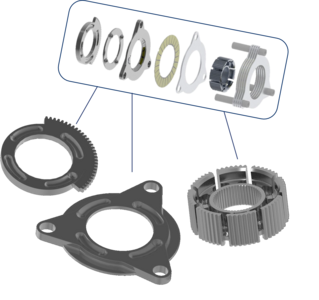
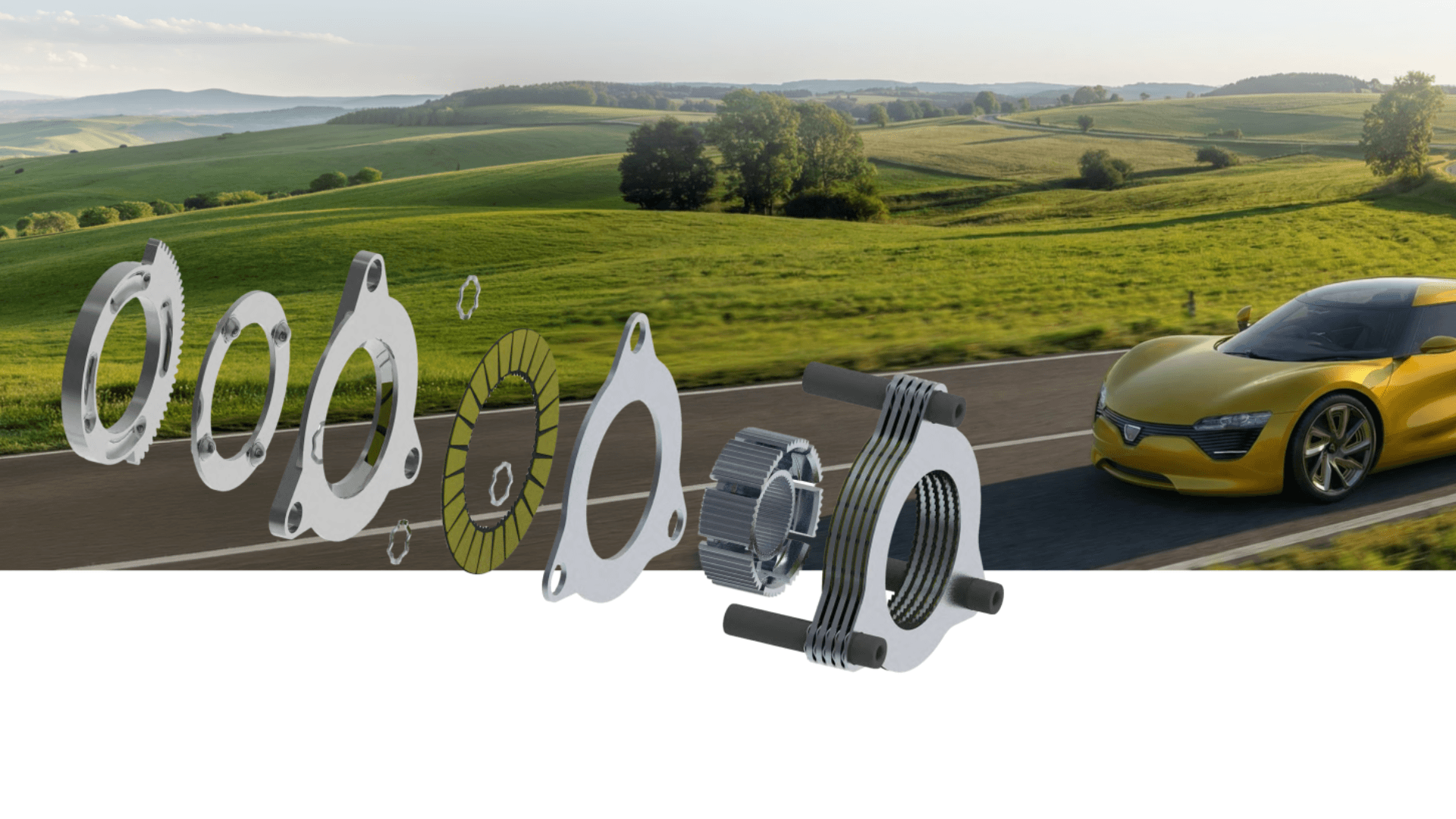
The Miba Zero Emission Brake is integrated into the drive unit as a wet multi-disc brake and combines braking function, actuation, and thermal management in a closed system. The electromechanical actuation mechanism transmits the braking torque to the disc stack at high speed via a ball-ramp mechanism.


Since it utilizes the electric motor’s oil cooling system, the multi-disc brake requires no additional effort. The overall system offers significant space-saving advantages.


Of particular technical significance is the encapsulated design: it is corrosion-free, maintenance-free, and makes the vehicle more efficient. The Zero Emission Brake is designed to meet the high requirements for braking torque, ABS/ESP functionality, fatigue strength, and thermal resistance, while also being prepared for upcoming particulate emission limits.

More Efficiency

The Zero Emission Brake achieves significant efficiency gains through a greatly reduced drag torque and optimized system design. Compared to conventional braking systems, the zero-emission multi-disc brake enables energy savings of approximately 2% (≈ 0.3 kWh/100 km), thereby reducing power loss during driving.

Higher power density

By making targeted use of a cooled, wet-running system, a significantly higher power density can be achieved. Active, demand-based cooling ensures stable thermal behavior even under high-load conditions and enables repeated braking at a constant power level. This results in high specific braking power combined with a compact design.

Optimized NVH performance and minimal wear

The zero-emission multi-disc brake offers optimized NVH performance and minimal wear. A stable coefficient of friction and a specifically designed friction characteristic ensure a particularly smooth, low-vibration braking feel that can be precisely controlled at all times.


At the same time, wear is reduced to a minimum (< 1.5 mm over the service life), enabling maintenance-free operation in line with a “fit for life” concept and significantly lowering the total cost of ownership for the customer over the service life. This is a clear advantage in modern, electrified vehicles.

High scalability

The Zero Emission Brake enables high scalability across different vehicle classes. Thanks to the modular design of the disc stack (e.g., varying the number of friction discs) and the use of common parts (“carryover parts”), the system can be flexibly adapted to different performance requirements. This facilitates integration into various platforms and supports cost-effective mass production.

Materials and system design as performance factors

The zero-emission multi-disc brake benefits significantly from a holistically optimized material and system design, in which Miba’s sintering technology, in particular, offers key advantages:


  • High-strength, wear-resistant material blends enable durable yet weight-optimized components that significantly improve braking performance.
  • Efficient manufacturing processes reduce the amount of post-processing required and contribute significantly to cost optimization.
  • The system's high adaptability, thanks to its modular, scalable components, allows for flexible configuration to meet various vehicle requirements.
  • Holistically coordinated system design ultimately delivers clear advantages in terms of performance, cost efficiency, and integration efficiency.

Would you like to make your braking system emission-free?

Markus Schauer
Teamleader Advanced Engineering

We would be happy to assist you with our expertise in your specific application.

Practical example: Zero-emission multi-disc brake in high-performance braking situations

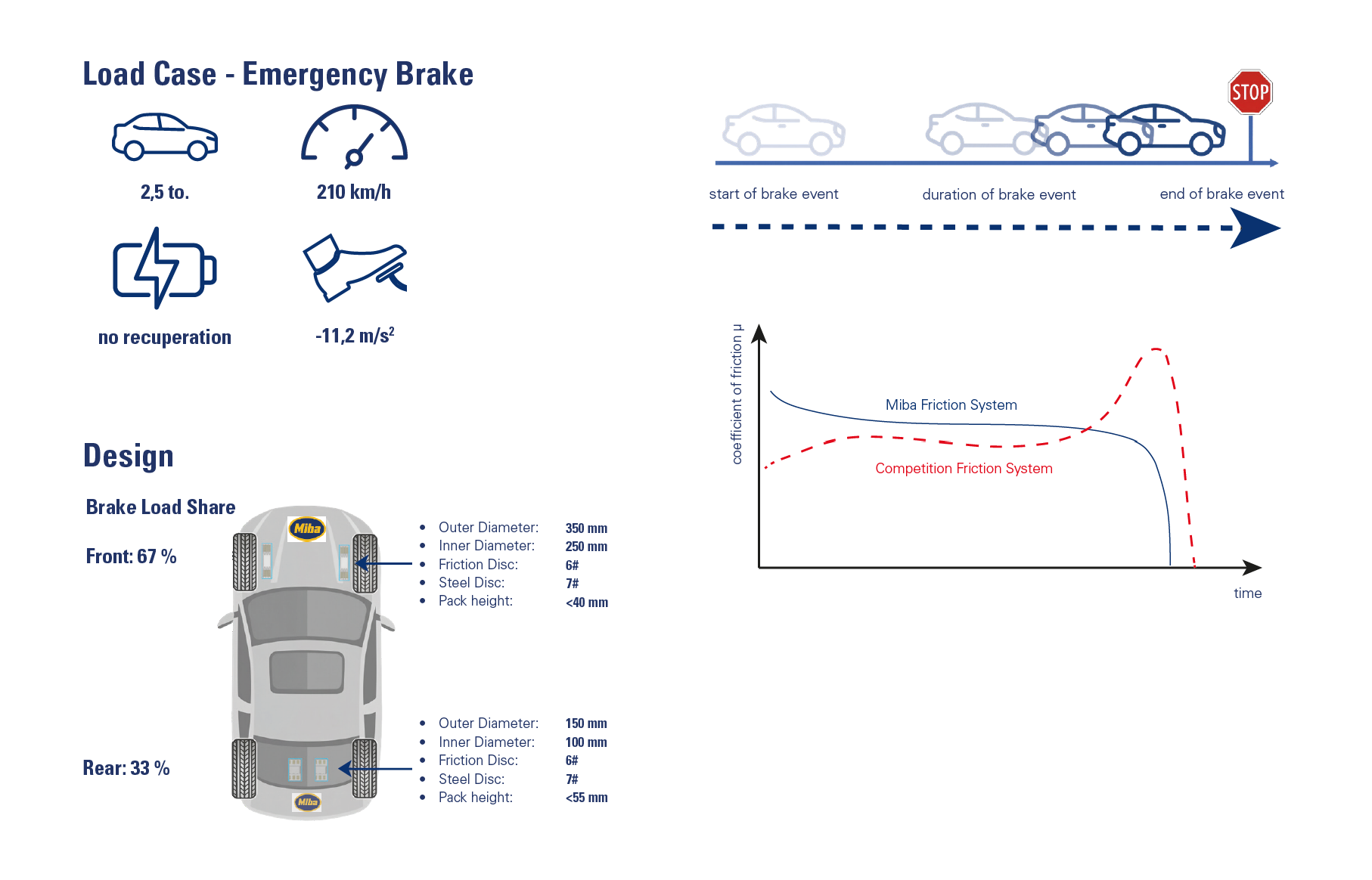
A typical application scenario for the zero-emission multi-disc brake is an emergency braking maneuver from high speed without the assistance of regenerative braking. In this load case, a vehicle with a mass of approximately 2.5 t is decelerated from 210 km/h at a deceleration rate of about 11.2 m/s². Despite these demanding requirements, the brake ensures stable and reproducible braking performance throughout the entire braking duration.


The underlying design is based on a compact disc stack consisting of multiple friction and steel discs, which allows for a large number of friction surfaces within a small installation space. This design ensures even load distribution and high thermal capacity. At the same time, integration into the system - for example, on the rear axle with adapted load distribution—enables optimal adaptation to the vehicle architecture.


In practice, this means that even under extreme conditions, braking performance remains consistent, while the system’s enclosed design ensures it operates emission-free and simultaneously offers advantages in terms of efficiency, durability, and integration into the vehicle’s layout.

Benefit from Miba's experience in the development of zero-emission brakes

For decades, we have been supporting our customers in the development of drive and braking systems - drawing on our in-depth expertise in friction materials, sintering technology, and the functional integration of critical components.


Our customers benefit from our experience in


  • brake design,
  • our understanding of the interaction between friction materials, steel, and oil,
  • and our high level of manufacturing expertise in producing precise, durable sintered components.


The result is a technically sophisticated solution that combines performance, efficiency and sustainability in a compact system.


Would you like to learn more about the Zero Emission Brake and its potential for future braking architectures?

Contact our experts today!

Contact Form