Main bearings in wind turbines

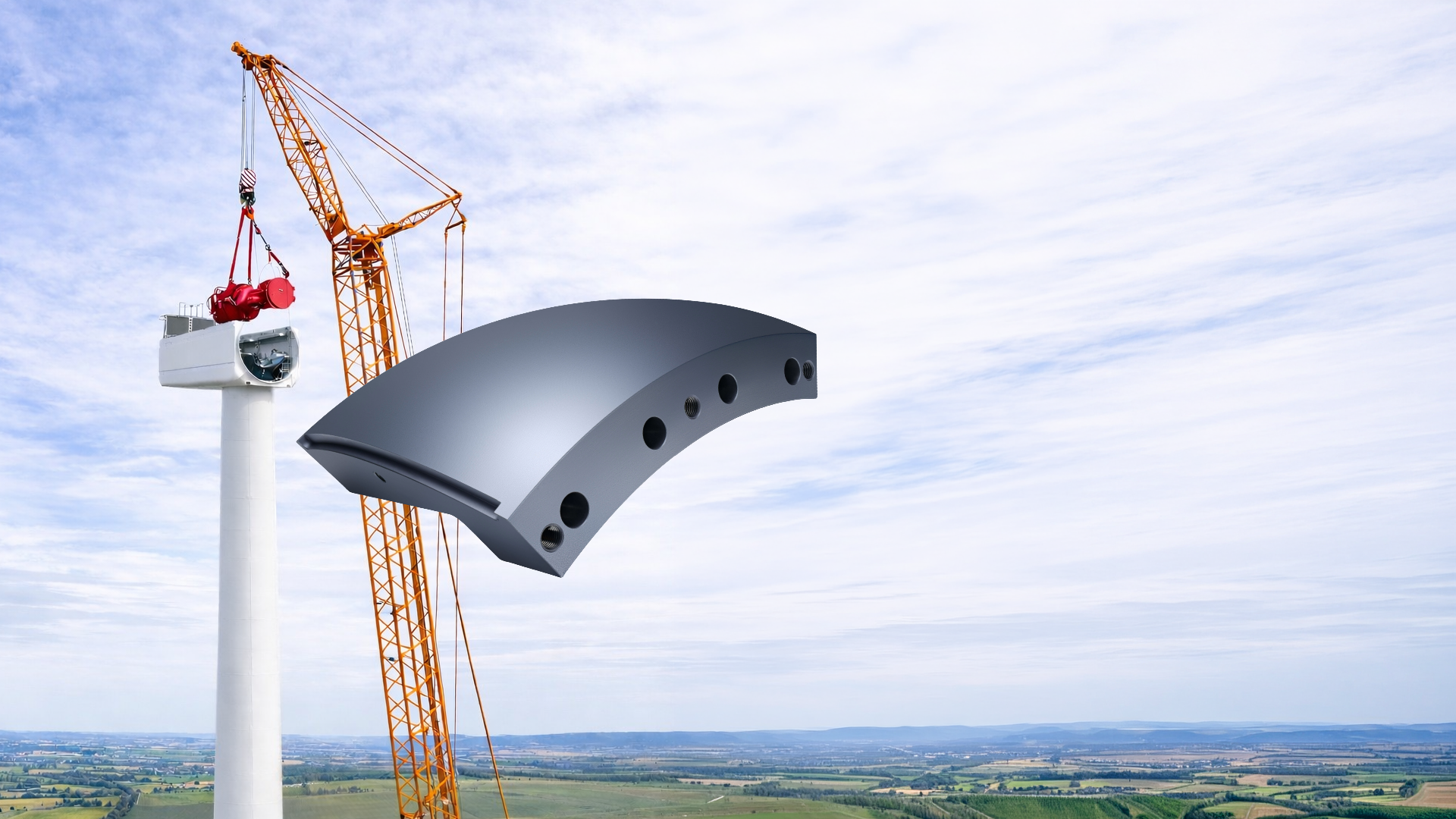
As turbine sizes increase, so do the rotor loads and dynamic stresses in the wind turbine drivetrain, while at the same time the demands on service life and availability rise. Miba main bearings are designed for high dynamic loads and contribute significantly to the extended service life of wind turbines. The segmented design eliminates the need for complex crane operations during maintenance work, which significantly improves the total cost of ownership over the entire service life.


How does the main bearing contribute to the reliability and efficiency of wind turbines?

Wind energy is a cornerstone of the global energy transition and at the same time, one of the most demanding engineering disciplines in renewables.

As turbines scale up to deliver higher output and lower levelized cost of energy (LCoE), every drivetrain component is pushed closer to its operational limits.


At the center of this load path lies one critical component: the wind turbine main bearing. It supports enormous rotor forces and bending moments, transfers torque to the gearbox with minimal losses and must operate reliably for decades, even under violent gusts, sudden storms and frequent start-stop events.

When traditional bearings in wind turbines reach their limits

Today's roller element bearings have limited load-carrying capacity and show high failure rates.

They account for less than 1% of a turbine's total cost — yet their failure can lead to losses of up to 100% of the turbine's value.


After all, downtime increases the levelized cost of electricity (LCoE). Reliability ensures the profitability of your wind power plant. 

Would you like to learn more about the use of hydrodynamic bearings in wind turbines?

Naresh Laddha
Program Manager Wind

Then get in touch! Our experts will be happy to assist you.

Miba Segmented Journal Bearing (SJB®) – The alternative for main bearings in wind turbines

Miba's bearings have been operating reliably under extreme loads and harsh conditions across many applications: from hydropower and turbomachinery to wind gearboxes.

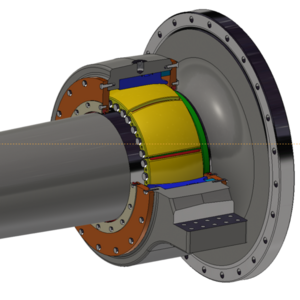
The Miba SJB® transfers this proven principle to the wind turbine main shaft. It is conceived for compactness, high power density and crane-less service.

Operating Principle of the SJB® – Powerful and scalable

The Segmented Journal Bearing® offers technical features that directly translate into operational benefits.


  • Non-Hertzian contact: Hydrodynamic load distribution dramatically reduces peak pressures, mitigating dominant roller-bearing failure modes (spalling, false brinelling, white etching cracks, ring creep).
  • Significant hydrodynamic operation from 0.05 m/s sliding speed: The bearing "rolls away before breaking away" — maintaining a lubricated regime even after long standstill periods.
  • Segment running surface geometry: Inherently accommodates shaft misalignment and bending.
  • Proven materials: 42CrMo4 steel substrate with laser-cladded CuSn12Ni2

    High wear resistance and metallurgical bond for long service life.


  • Compatible with existing design spaces: e.g.  240/800 & 240/950

    Drop-in compatible. No modifications of main shaft or housing required.


  • Truly scalable principle: Supports platform growth without driving contact stresses to extreme levels or inducing stick-slip effects.


Maintenance directly on the tower – craneless Bearing service 


A main bearing failure in a wind turbine is never just a technical event.

The real cost multiplies far beyond the replacement part: logistics, crane mobilization, manpower, lost energy production, warranty exposure, and reputational impact.


The Miba SJB® changes the service equation entirely:

  • Replaceable segments exchanged directly up-tower, inside the nacelle. 
  • No external crane required. Drastically reducing logistical complexity and downtime.
  • Predictable maintenance via condition indicators, load data, and direct visual access. 

  • Local supply of spare parts through Miba's global footprint.


Independent techno-economic analyses indicate an LCoE reduction of up to 1.5 percentage points — a decisive lever for the competitiveness of wind energy

Would you like to learn more about the benefits of Segmented Journal Bearings (SJB®) as main bearings in wind turbines?

Patrick Laubichler
System Engineer

Our experts are happy to answer your questions!

The platform profitability equation

Selecting main bearings for wind turbines involves more than just the price of the components.

The Miba SJB® enhances turbine platform profitability along three strategic paths - with negligible impact on total turbine CAPEX:

Icon Extend Product Lifecycle
Extend product lifecycle

Reduce system weight and cost while increasing operational life.

Within your existing turbine architecture.

Icon Increase power
Increase output without added weight

Higher power output without exceeding transport or lifting limits. Lower LCoE for asset owners.

Stronger market position for OEMs.

Icon craneless service
Service without crane

Significantly lower OPEX exposure. Opportunity to unlock new, profitable service agreements.

Gain creators & pain relievers

For main bearings in wind turbines, the Miba Segemented Journal Bearing® offers many economic advantages


  • Low OpEx due to improved availability
  • Future-ready — enabling power density increase and compact drivetrains
  • Longer lifetime due to simple, robust design
  • Low downtime through crane-less serviceability
  • Easy and full recyclability for a low CO₂ footprint
  • Lower system and service costs
  • Significant improvement in reliability; lowering failures across useful life
  • Easy handling and local supply of spare parts

Your development partner for main bearings in wind turbines

Miba is your development partner for main bearings in wind turbines, offering unique testing and simulation expertise as well as application knowledge. With around 100 years of bearing expertise, the Miba Bearing Group has grown into a reliable and global partner for functionally critical components.


We work closely with leading OEMs and gearbox manufacturers, combining application expertise with engineering know-how across the entire product lifecycle:


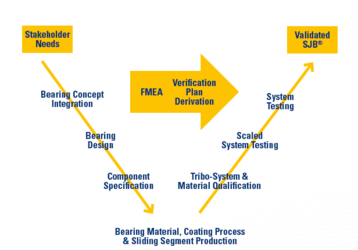
  • In-house design, simulation, and testing including FMEA and full-scale drivetrain validation
  • Holistic system perspective: from material science to application engineering
  • Industrialized precision: functionally important geometries produced with the highest repeatability
  • Field engineering support — turning operational insights into design action
  • Local-to-local supply strategy backed by a global footprint
  • Financial independence ensuring long-term supply security

We’re here to support your project with our expertise right from the start!

Get in touch!