- Company
- Industries
- Product areas
- Technology
- Jobs and Career
- Apprenticeship
- Kariéra
- News

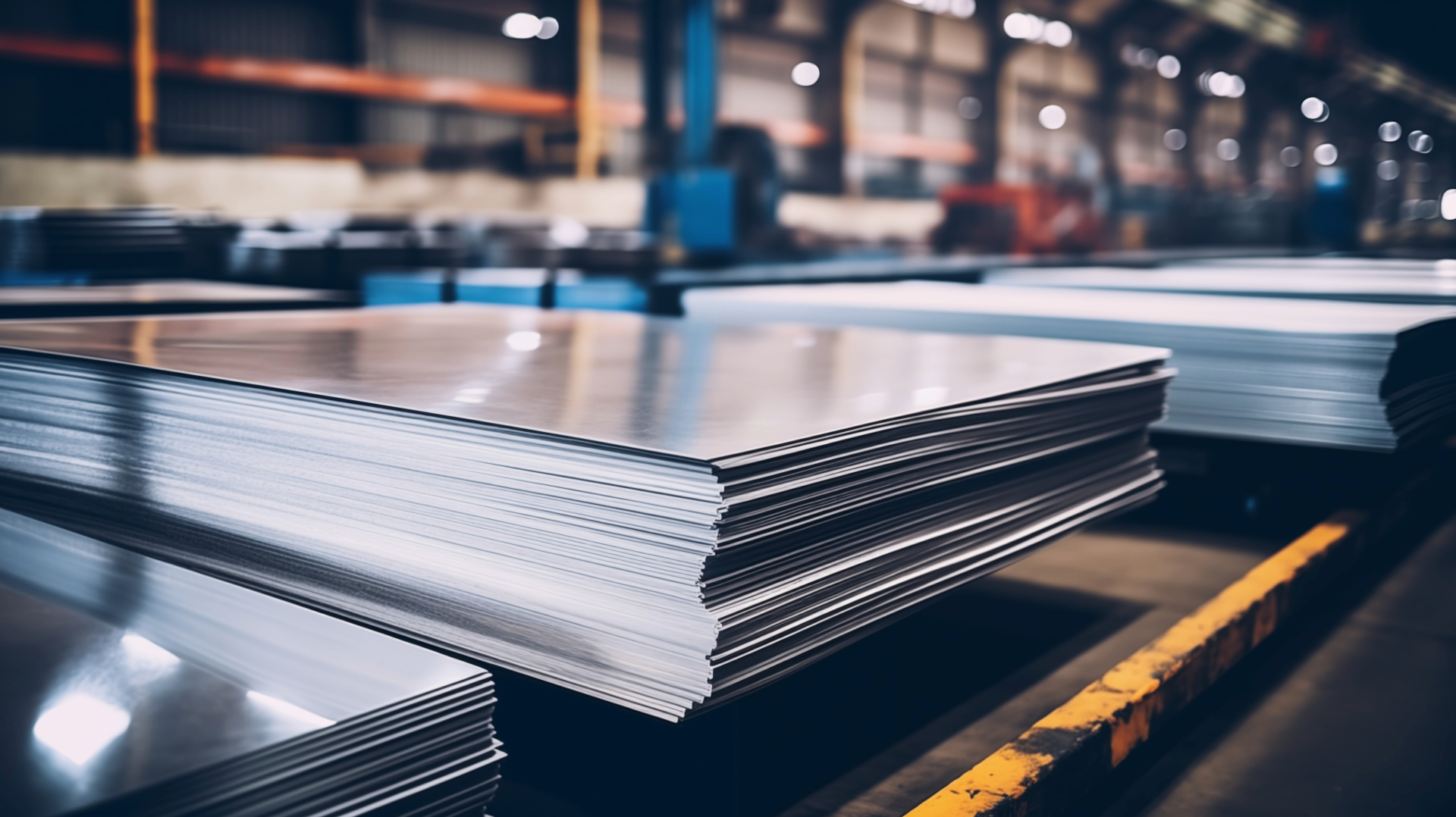
Miba develops and manufactures clad materials, ranging from standard composites to custom solutions. Even in small quantities. And, of course, with personalized technical consultation.
You know exactly what you need:
What you don’t know is whether your requirements are feasible.
If you’re looking for clad materials for a specific application, you need a supplier who thinks along with you - not just one who delivers.
At Miba, we provide personalized, one-on-one support.

Just ask our experts. Together, we’ll find a solution that meets your needs.
Clad materials permanently bond two or more metals together. Each combination serves a specific technical purpose: corrosion protection, electrical conductivity, strength, weight reduction, or cost optimization.
Miba can manufacture clad sheets in the following typical combinations and applications:
| Combination | Typical application |
| Stainless steel on steel | Pressure vessels, equipment manufacturing, corrosion protection |
| Copper on steel | Electrical contacts, oil coolers, conductivity + strength |
| Aluminum on steel | Heat shields, lightweight construction, corrosion protection |
| Nickel / Nickel-based alloys on steel | High-temperature applications, chemistry |
| Special combinations | Available upon request, including technical consultation |
Can't find your combination in the table? Feel free to ask anyway. Many custom solutions are possible!
Send your inquiry now!
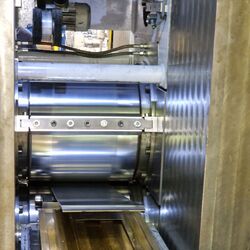
The choice of process depends on your material combination, the desired thickness, and the requirements for the joint zone. No single process is universally superior; each has its own specific applications.
Cold roll bonding: Suitable for strips and thin sheets. Strip thicknesses from 0.05 to 5 mm, strip widths up to 800 mm. Strip thicknesses up to 20 mm and strip lengths up to 3 m. High dimensional control, wide range of materials.
Economical for higher quantities

Hot-rolled bonding: For heavy plates. Total thicknesses up to 150 mm and more, widths up to 4 m, lengths up to 12 m. Suitable for pressure vessels and equipment manufacturing.
Blast bonding: The widest range of materials of any process. No thermal stress on the joint zone.
Thanks to manufacturing technologies for small quantities, we can provide cladding materials even where traditional methods require a minimum volume.
We will determine which process is best suited for your application during a technical consultation.

Clad materials are rarely off-the-shelf. Most applications have specific requirements regarding thickness, layer structure or material combinations.
What sets Miba apart:
Do you have an unusual combination and/or small quantities?
We’ll provide you with a detailed technical assessment.
Request a quote now
In many industries, clad sheets are the more technically sound choice compared to solid materials or coatings. Potential applications include:
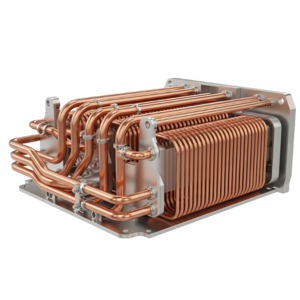
Heat exchangers, cooling systems, components for power plants and renewable energy sources

Copper-steel composites for electrical contacts and conductive traces with strength requirements
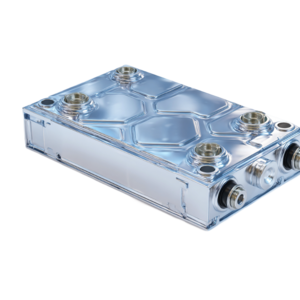
Oil coolers, heat exchangers, composite plates for thermal separation and heat transfer.

"Many of the inquiries we receive from customers involve special requirements - whether due to small order quantities or unusual combinations.
That is precisely where our strength lies: in providing customized solutions for challenging tasks.
- Matthias Köhler, Global Lead Material Processing -
Common combinations include stainless steel on steel, copper and copper alloys on steel, aluminum on steel, aluminum on copper and vice versa, as well as nickel and nickel-based alloys on steel.
Brass on steel is possible for decorative applications with strength requirements.
Special combinations are evaluated upon request. Feasibility depends on the selected process and the material properties.
In roll cladding, the metals are bonded together using pressure and heat. Cold roll cladding produces thin sheets, strips (0.05 to 5 mm), and bars up to 20 mm in diameter, while hot roll cladding produces thick sheets up to 150 mm in thickness.
Yes. Miba can produce sheets up to 20 mm thick using cold-rolled cladding. Larger thicknesses up to 150 mm can be achieved with hot-rolled cladding. Explosive cladding is also suitable for greater thicknesses.
The process best suited to your requirements depends on the material combination and the intended application. Miba will clarify this during the technical consultation.
At Miba, yes. Large suppliers often require minimum order quantities, which rules out small batches.
Thanks to specialized manufacturing technologies, Miba is able to produce clad materials in small quantities.
In cladding, two metals are permanently and metallurgically bonded. The bond is mechanically strong and withstands pressure, temperature, and deformation.
A coating (e.g., electroplated or painted) lies on the surface and is not metallurgically bonded.
For structural or thermal applications, cladding is therefore the technically superior solution


